How We're Thinking About AI Adoption at Imprint
Our CTO, Will Larson, recently wrote up how we’re approaching AI adoption at Imprint. The core idea is strategy testing: identify a few goals, pick an initial approach, and iterate rapidly until it actually works. The biggest risk in AI adoption isn’t picking the wrong model or tool, it’s focusing on optics when it’s the detailed implementation mechanics that will determine whether adoption is impactful.
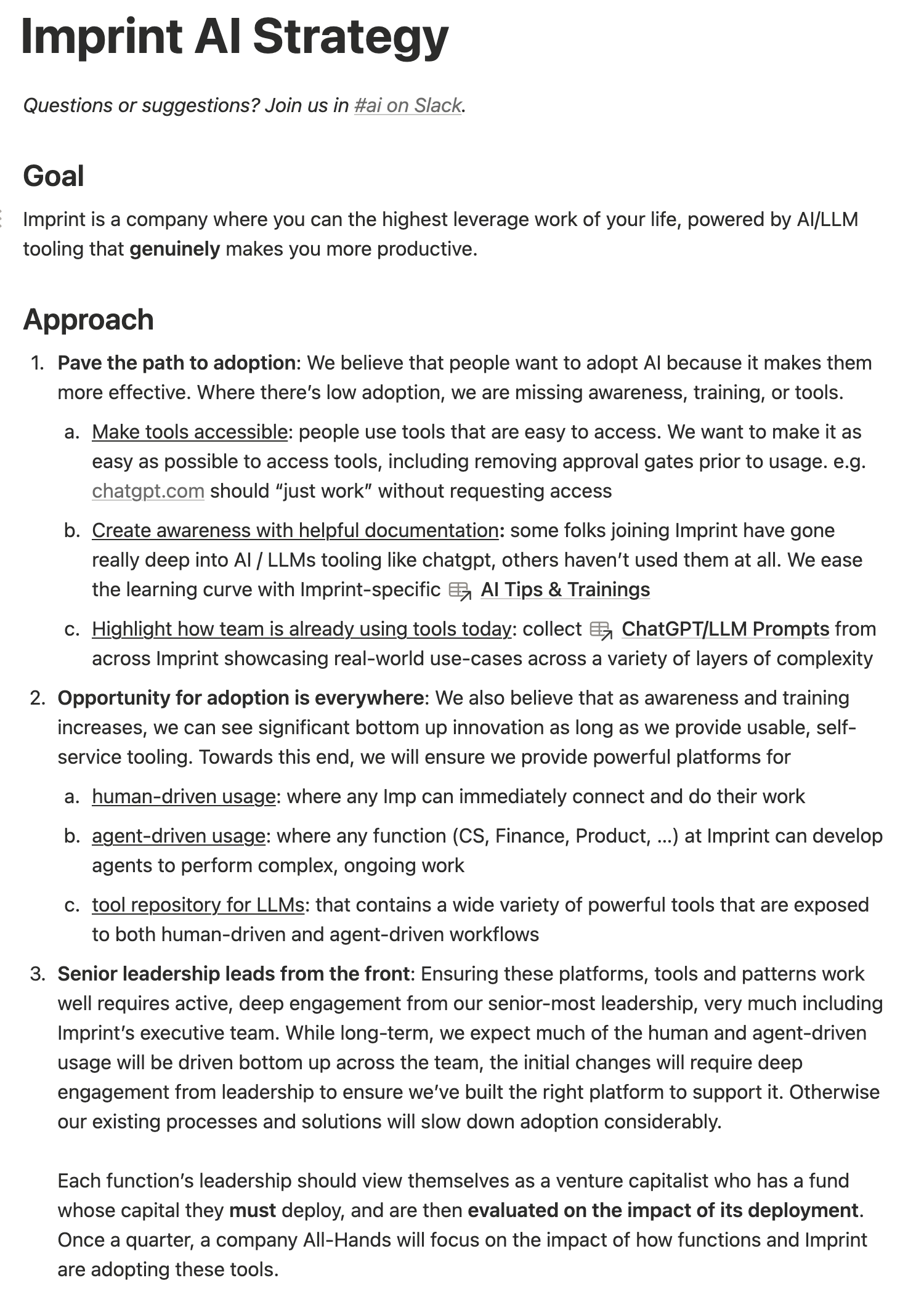
We’ve organized around three pillars:
- Pave the path: remove obstacles to adoption, especially access barriers. If people can’t easily use the tools, they won’t.
- Opportunity everywhere: AI isn’t just an engineering play, it’s useful across every function.
- Leadership from the front: senior leaders need to use these tools directly. If leadership only hears about AI through reports, they can’t distinguish tools that demo well from tools that actually help.
One thing that’s become clear is that product engineering beats platform engineering for AI adoption. The effective pattern is finding high-impact workflows, partnering with domain experts on a first version, making the solution extensible, and then watching adoption as your signal for problem-solution fit. We’ve also found that centralizing prompts in a discoverable place (we use Notion) pays off quickly. It gives visibility into what’s possible, helps people learn from good examples, and shifts ownership from individuals to teams.
The boring technical details matter more than you’d expect. Entity resolution for users in Slack or pages in Notion, format validation for Slack and Jira, automatic account provisioning—these aren’t exciting problems, but they’re the difference between tools people actually use and tools that get abandoned. The full post goes deeper!